
The Berkeley Homeowner’s Guide to Expansive Soil and Seismic Safety
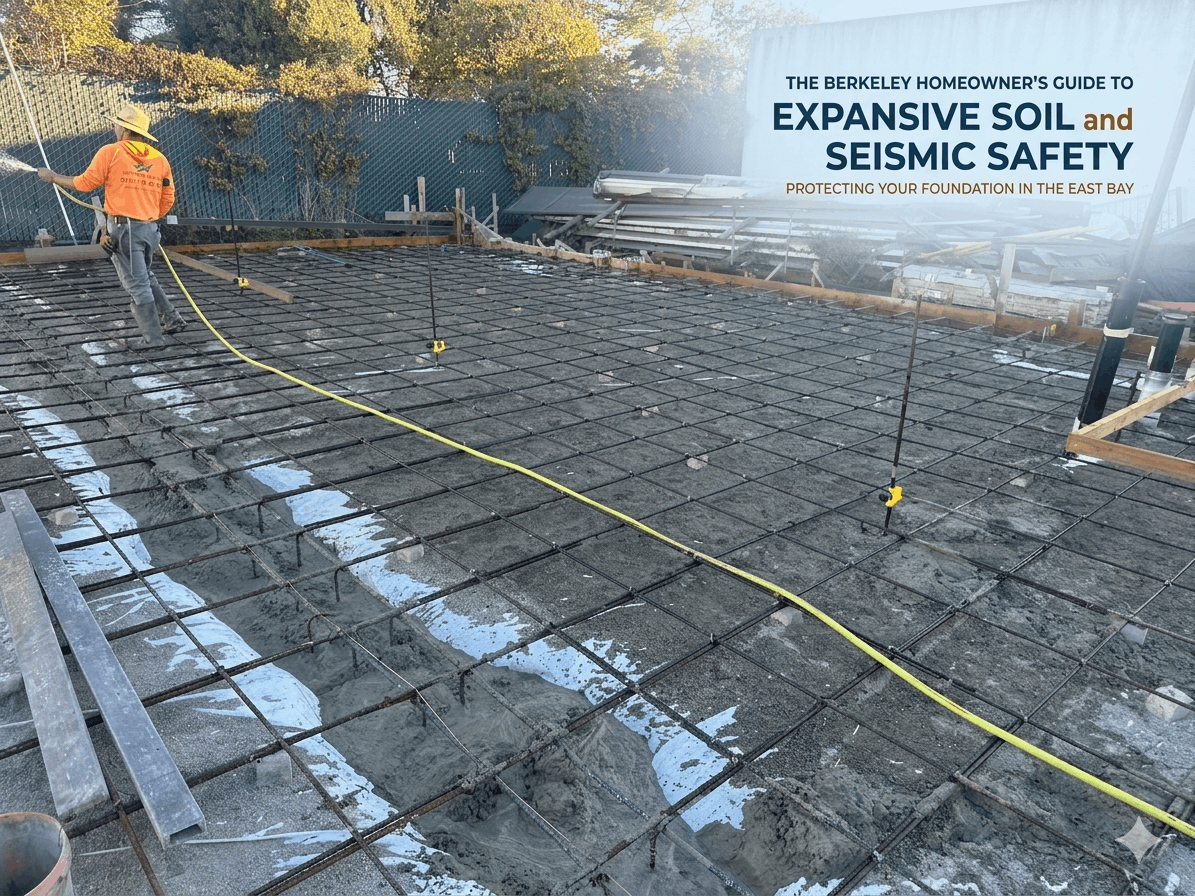
The Berkeley Homeowner’s Guide to Expansive Soil and Seismic Safety
Owning a home in Berkeley is a dream for many, but the city’s unique geography—stretching from the historic “flats” near the San Francisco Bay to the steep, winding roads of the Berkeley Hills—presents a specific set of structural challenges. If you’ve noticed a new crack in your drywall or a bedroom door that suddenly refuses to latch, you aren’t alone.
In 2026, as climate patterns shift and seismic awareness remains at an all-time high, understanding Foundation Repair in Berkeley, CA is no longer just about fixing a “house problem”; it’s about protecting your largest financial asset against some of the most complex soil conditions in the country.
1. The Science of the “Berkeley Squeeze”: Understanding Our Soil
To understand foundation failure in Berkeley, you first have to understand what sits beneath your floorboards. Berkeley is notorious for expansive clay soils, often referred to as “Adobe Clay.”
The Sponge Effect
Think of Berkeley’s soil as a giant sponge. During our wet winters, the clay absorbs water and expands (heave). During the dry, hot summers—which have become increasingly intense in recent years—the soil loses moisture and shrinks (settlement).
The Seasonal Cycle
This constant “breathing” of the earth puts immense pressure on concrete foundations.
-
The Flats: In areas like West Berkeley or Ocean View, the soil is often deep and heavy. This leads to uniform settlement or differential settlement, where one corner of the house sinks faster than the others.
-
The Hills: In North Berkeley or the Claremont district, homeowners deal with soil creep. Gravity is constantly pulling the top layer of soil down the slope, which can cause foundations to “slide” or rotate over decades.
2. Warning Signs: Is Your House Trying to Tell You Something?
Many Berkeley residents overlook early warning signs, attributing them to the “charm” of an old Craftsman or Victorian home. However, waiting too long can turn a $10,000 stabilization project into a $150,000 total foundation replacement.
Interior Red Flags
-
The “Summer Door”: A door that sticks in August but swings freely in January is a classic sign of seasonal soil movement.
-
Window Gaps: Gaps between the window frame and the wall, or windows that are difficult to crank open.
-
Sloping Floors: If you drop a marble in your hallway and it consistently rolls toward the front door, your foundation has likely tilted.
Exterior Red Flags
-
Stair-Step Cracks: Look at your exterior brickwork or stucco. Cracks that follow the mortar lines in a zigzag pattern are a “Level 1” emergency.
-
Chimney Separation: If you can see daylight between your chimney and the siding of your house, the chimney’s heavy footing is pulling away from the main structure.
-
Horizontal Cracks: These are often more dangerous than vertical ones, as they indicate that hydrostatic pressure (water in the soil) is pushing your basement or crawlspace walls inward.
3. Seismic Retrofitting vs. Foundation Repair
One of the most frequent questions we see in 2026 is: “If I fix my foundation, is my house earthquake-proof?”
The short answer is: No. They are two different, albeit related, services.
| Feature | Foundation Repair | Seismic Retrofitting |
| Goal | To level the home and fix structural damage. | To prevent the home from sliding off its base during a quake. |
| Focus | Soil stability, piers, and concrete health. | Bolts, plates, and shear walls. |
| Urgency | Immediate (prevents further house decay). | Preventative (prepares for the “Big One”). |
The Berkeley Strategy: In many cases, if you are already lifting your home or repairing a crawlspace, it is significantly cheaper to perform a seismic retrofit simultaneously. Most of the cost in Berkeley foundation work is the “prep”—excavation and gaining access. Doing both at once can save a homeowner up to 30% in labor costs.
4. Modern Solutions for 2026: Beyond Just Pouring Concrete
Gone are the days when the only solution was to “tear it all out and start over.” Modern engineering offers surgical ways to stabilize a Berkeley home with minimal disruption to your landscaping.
Resistance and Helical Piers
For homes in the Berkeley flats, we often use Piers. These are steel shafts driven deep into the earth—past the unstable “Adobe” clay—until they hit load-bearing strata or bedrock. Your house is then essentially “pinned” to the stable earth.
Polyurethane Injection
A newer, less invasive trend in 2026 is high-density foam injection. If your concrete slab (like a garage floor or patio) is sinking, we can inject a specialized resin that expands to lift the concrete back to its original height.
Crawlspace Encapsulation
Since moisture is the enemy of Berkeley soil, many homeowners are opting for encapsulation. By lining the crawlspace with a heavy-duty vapor barrier and installing a dehumidifier, you keep the soil moisture levels consistent year-round, stopping the “shrink-swell” cycle before it starts.
5. The Financials: Grants, Permits, and ROI
Berkeley has some of the strictest building codes in California. Navigating the permit office at 1947 Center Street can be a headache, but it’s essential for your home’s resale value.
The EBB Grant Program
The Earthquake Brace + Bolt (EBB) program is still a vital resource in 2026. For eligible ZIP codes in Berkeley (like 94703 or 94708), homeowners can receive grants of $3,000 or more toward a seismic retrofit. If you are doing foundation repair, check if your contractor is EBB-certified so you can claim this credit.
Impact on Resale Value
In the competitive East Bay real estate market, a “Section 1” clearance and a certified stable foundation are massive selling points. Buyers in 2026 are savvy; they will often walk away from a beautiful house if the inspection report shows unaddressed foundation “settlement.” Conversely, a home with a “transferable lifetime warranty” on its foundation piers often sells for a premium.
6. Choosing a Berkeley-Specific Contractor
Don’t just hire any general contractor. Foundation work is a specialized science. Here is what you should ask:
-
“Are you familiar with the Hayward Fault map?” Your contractor should know exactly how close your property sits to the fault line.
-
“Do you handle the Berkeley permit process?” You want a “turnkey” solution where the contractor deals with the city inspectors.
-
“Do you provide a soil engineer’s report?” For significant repairs, a licensed engineer should always verify the plan.
Conclusion: Don’t Wait for the Next Big Rain
The drought-and-deluge cycles of California weather mean that Berkeley foundations are under more stress than ever before. While the sound of a “foundation issue” is scary, the technology available in 2026 makes these repairs more permanent and less intrusive than in the past.
If you’ve seen the cracks, felt the slopes, or wrestled with a sticking door, now is the time to act. A simple inspection today could be the difference between a minor stabilization and a major structural crisis tomorrow.