
Composite vs. Wood Decking: Which Is Better for Your Home?
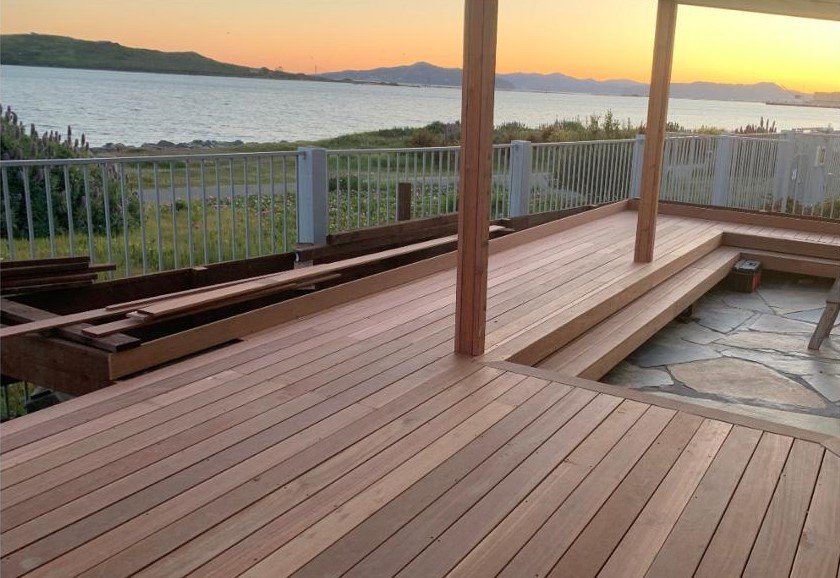
Composite vs. Wood Decking: Which Is Better for Your Home?
If you’re planning a new deck or replacing one that’s seen better days, you’ll eventually land on the same fork in the road every homeowner faces: composite or wood?
It’s not a trivial choice. Decking is one of the few home improvements you’ll touch with your bare feet every summer, and the material you pick shapes your weekend maintenance routine, your budget, and how the deck looks a decade from now. Wood has the head start of tradition and a lower price tag at checkout. Composite has spent the last twenty years closing the appearance gap while asking a lot less of you in return.
There’s no single right answer — but there is a right answer for your home, your budget, and how you actually want to spend your Saturdays. Here’s how BleuNet breaks it down.
Composite vs. Wood at a Glance
| Composite | Wood | |
|---|---|---|
| Upfront cost | Higher | Lower |
| Maintenance | Minimal | Regular cleaning, staining, sealing |
| Typical lifespan | 25–50 years | 10–30 years, depending on species |
| Rot/insect resistance | Excellent | Depends on species and upkeep |
| Appearance | Manufactured, increasingly realistic | Authentic, ages with character |
| Refinishing | Rarely needed | Needed every few years |
That’s the summary. Here’s the reasoning behind it.
1. Is Composite Worth the Higher Price Tag?
Composite decking costs more per square foot than basic pressure-treated lumber — often noticeably more. But the sticker price at installation is only half the financial picture.
Wood decks need to be cleaned, sealed, and often restained on a recurring schedule, and boards that crack, splinter, or rot eventually need replacing. None of that is optional if you want the deck to stay safe and presentable — it’s baked into the cost of owning wood. Composite is designed to sidestep most of that cycle: no staining, minimal sealing, and far less vulnerability to the moisture and insect damage that drive wood repairs.
So the real comparison isn’t “$4,000 deck” vs. “$7,000 deck.” It’s the installation cost plus what you’ll spend and do over the next fifteen years. Run that math, and composite often closes the gap — sometimes flips it entirely.
Wood still wins on pure upfront affordability, and if keeping this year’s budget as low as possible is your priority, that matters. But if you’re weighing total cost of ownership, composite deserves a longer look than the price tag alone suggests.
2. Which One Lasts Longer?
Composite generally outlasts standard wood decking, particularly the pressure-treated lumber most budget builds use. Quality composite boards are engineered specifically to resist the things that age a deck: moisture, sun, insects, and freeze-thaw cycles. A well-installed composite deck can reasonably be expected to last several decades.
Wood’s lifespan is more variable. A well-maintained hardwood deck can hold up for many years, but wood is an organic material living outdoors, and left unsealed or under-maintained, it’s susceptible to rot, warping, splitting, and insect damage — sometimes within just a few seasons. The wood itself isn’t the only variable; drainage, climate, and how consistently you keep up with sealing all play a role.
The honest takeaway: composite is the lower-risk choice for longevity. Wood can match it, but only with consistent upkeep — which brings us to the next question.
3. Which Requires Less Maintenance?
This one isn’t close. Composite is the clear winner.
A wood deck asks for real, recurring work — periodic cleaning, sanding, and restaining, plus the occasional board replacement when something splits or rots. Skip a maintenance cycle or two, and the deck starts to show it fast. Over twenty years, that adds up to a genuine chunk of weekends and a real line item in your home maintenance budget.
Composite asks for much less: occasional washing to clear off dirt, leaves, and spills, and that’s largely it. It’s not entirely maintenance-free — nothing left outdoors permanently is — but it’s a fraction of what wood demands.
If low-maintenance ownership is your priority, composite is the practical choice. If you actually enjoy the ritual of caring for a wood deck — some homeowners genuinely do — that upkeep isn’t a downside so much as part of the appeal.
4. Which One Looks More Natural?
Here, wood still has the edge. No manufactured product fully replicates the irregularity of real grain, knots, and the way natural wood tones shift and weather over time. For homeowners who want that authentic, slightly imperfect character, nothing else quite matches it.
That said, the gap has narrowed considerably. Today’s premium composite boards use embossed wood-grain textures and multi-tonal coloring that reads as real wood from a normal viewing distance, and they come in a far wider range of consistent colors than most natural wood species offer.
Think of it as a trade-off between two different aesthetics rather than a upgrade path: wood gives you organic, one-of-a-kind character that changes as it ages. Composite gives you a curated, consistent look that stays the same year after year. Which one appeals to you is largely a matter of taste.
5. Which Delivers Better Long-Term Value?
Long-term value isn’t just the purchase price — it’s price plus durability, maintenance, repairs, and how much of your time the deck asks for over its life.
By that measure, composite tends to come out ahead despite costing more upfront. Less maintenance, fewer repairs, a longer expected lifespan, and a consistent appearance that doesn’t depend on you keeping up a sealing schedule all add up to lower total cost and less hassle over time.
Wood isn’t a bad value — it’s a different value proposition. It rewards a lower initial budget and a homeowner who’s willing (or wants) to put in the maintenance to protect that investment. For some homes and some homeowners, that trade is entirely worth it.
What This Means If You’re in Berkeley or the Bay Area
Climate matters here more than people expect. Bay Area decks deal with coastal moisture, fog, and seasonal rain that put real stress on any material — and installation quality often matters as much as the material choice itself. Proper drainage, correctly spaced joists, and the right fasteners can be the difference between a deck that lasts and one that needs early repairs, regardless of whether you go composite or wood.
If you’re planning a new build or a replacement, it’s worth having a local contractor walk the site before you commit to a material. They can flag drainage issues, check the structural support, confirm what your local building department requires, and give you a realistic estimate for both composite and wood so you’re comparing real numbers, not just averages. BleuNet works with homeowners throughout Berkeley and the greater Bay Area on exactly this kind of planning, from material selection through final walkthrough.
So, Composite or Wood?
Choose composite if: you want minimal maintenance, maximum durability, and a consistent look you won’t have to touch up every few years.
Choose wood if: you want the authentic character only natural material provides, you’re working with a tighter upfront budget, or you don’t mind — or actually enjoy — the maintenance that comes with it.
Both materials can make an excellent deck. The right one depends on how you weigh cost against convenience, and character against consistency — and how you want to be spending your Saturdays ten years from now.
If you’re weighing composite against wood for your own home, BleuNet can walk the site, talk through both options against your budget and goals, and help you land on a deck that’s built to last.