
California Earthquake Safety Requirements Explained for Property Owners
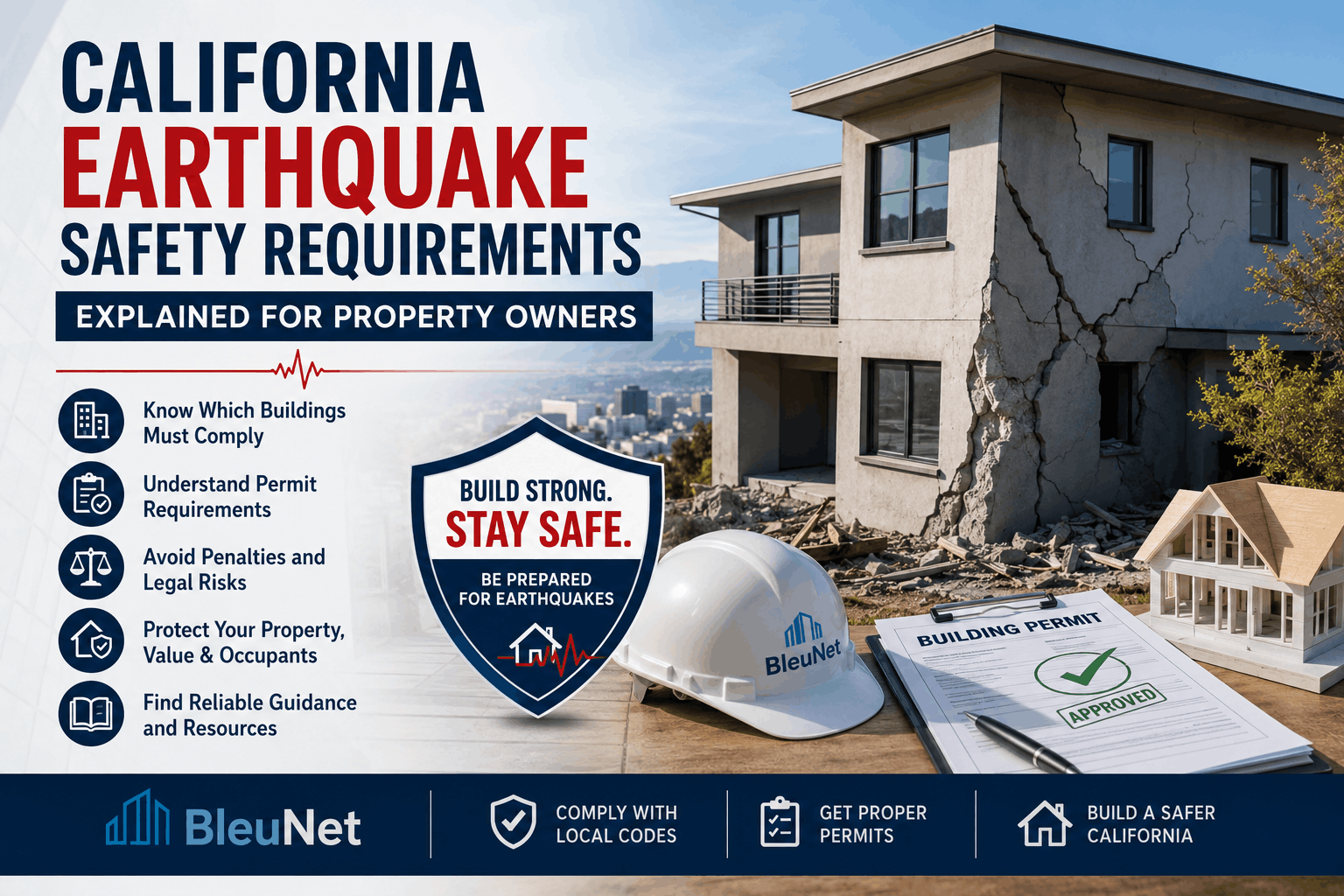
California Earthquake Safety Requirements Explained for Property Owners
California is one of the most seismically active regions in the United States, making earthquake preparedness an essential responsibility for every property owner. Whether you own a residential home, an apartment building, or a commercial property, understanding local safety requirements can help protect lives, reduce structural damage, and avoid costly legal or financial consequences.
While every building is different, California has developed strict building codes and local ordinances designed to improve public safety during seismic events. These regulations continue to evolve as engineers gain a better understanding of earthquake risks and construction technology advances.
This guide explains what property owners need to know about earthquake safety requirements, including who must comply, when permits are required, how regulations are updated, and where to find trustworthy information before starting any structural improvement project.
Why Earthquake Safety Regulations Matter
Earthquakes cannot be prevented, but the damage they cause can often be reduced through proper planning and structural improvements. Many older buildings were constructed before modern seismic standards were introduced, making them more vulnerable during strong ground movement.
California’s building regulations aim to:
- Improve occupant safety
- Reduce structural collapse during earthquakes
- Minimize property damage
- Protect neighboring buildings
- Support faster community recovery after major seismic events
For property owners, complying with these requirements is not simply about following the law. It is also an investment in the long-term value, safety, and resilience of a property.
Which Buildings Must Comply with Local Regulations?
One of the most common questions property owners ask is whether their building is required to meet current earthquake safety standards.
The answer depends on several factors, including:
Building Age
Older structures constructed before updated seismic building codes may require evaluation or upgrades. Buildings erected decades ago often lack the reinforcement expected in modern construction.
Construction Type
Certain structural systems have historically performed poorly during earthquakes. Local governments may require inspections or improvements for buildings with known vulnerabilities.
Examples include:
- Soft-story apartment buildings
- Older masonry structures
- Non-ductile concrete buildings
- Hillside homes with inadequate bracing
- Commercial buildings built under outdated codes
Property Location
Requirements may vary between cities and counties. Municipalities located near active fault systems often adopt additional local ordinances beyond the California Building Code.
Building Use
Properties occupied by multiple families, employees, customers, or the general public typically face stricter safety expectations than single-family homes.
Because regulations differ by jurisdiction, property owners should always verify the specific requirements applicable to their location before planning renovations or structural improvements.
Are Permits Required Before Construction?
Yes, permits are typically required before beginning structural work related to earthquake safety.
Obtaining the appropriate permits allows local building departments to verify that the proposed work meets current engineering and safety standards.
A typical permit process includes:
- Structural evaluation
- Engineering drawings
- Plan review
- Permit approval
- Scheduled inspections during construction
- Final approval after completion
Skipping the permit process can create significant complications later, especially when selling or refinancing a property.
Working with experienced structural professionals helps ensure that every stage of the project complies with applicable regulations.
What Happens If Requirements Are Ignored?
Ignoring earthquake safety regulations can have serious consequences that extend far beyond potential fines.
Increased Safety Risks
Buildings that do not meet seismic requirements are generally more susceptible to damage during earthquakes. Structural weaknesses may place occupants at greater risk.
Legal Liability
If an earthquake causes injuries and an investigation finds that known safety requirements were ignored, property owners may face legal claims or increased liability.
Insurance Challenges
Some insurance providers may question claims involving unpermitted structural work or failure to comply with required building standards.
Delays During Property Sales
Many buyers conduct thorough inspections before purchasing a property. Outstanding code issues or undocumented structural work can delay or even prevent a successful transaction.
Higher Repair Costs
Addressing structural deficiencies before an earthquake is often significantly less expensive than repairing extensive damage afterward.
Proactive compliance not only protects people but also helps preserve long-term property value.
How Often Do Earthquake Regulations Change?
Earthquake safety regulations are not static.
California regularly updates its building codes to reflect:
- New engineering research
- Lessons learned from recent earthquakes
- Advances in construction materials
- Improved structural design methods
- Updated national safety standards
The California Building Standards Code is generally updated on a three-year cycle, although local governments may adopt additional amendments or emergency ordinances when necessary.
Property owners should not assume that previous approvals automatically satisfy today’s requirements. Projects planned years ago may need to meet newer standards before construction begins.
Consulting local building officials or qualified structural professionals helps ensure compliance with the latest regulations.
Where Can Property Owners Find Reliable Guidance?
Finding accurate information is critical because earthquake regulations can vary by jurisdiction.
Reliable sources include:
Local Building Departments
City and county building departments provide information about permits, inspections, and locally adopted ordinances.
Licensed Structural Engineers
Structural engineers evaluate existing buildings and recommend improvements that meet current codes.
Qualified Structural Contractors
Experienced contractors understand approved construction methods and work closely with engineers throughout the project.
California Building Code
The California Building Code establishes statewide minimum requirements for structural safety.
Local Government Websites
Many municipalities publish guidance documents, retrofit programs, permit requirements, and compliance deadlines online.
Relying on professional guidance helps property owners avoid costly mistakes and ensures projects are completed correctly the first time.
Common Misconceptions About Earthquake Safety Regulations
Many property owners misunderstand how earthquake requirements apply to their buildings.
“My Building Has Never Been Damaged.”
Past performance does not guarantee future safety. Every earthquake is different, and aging structures can become more vulnerable over time.
“Only Very Old Buildings Need Upgrades.”
Although older buildings often receive the most attention, newer buildings may also require improvements after renovations, additions, or changes in occupancy.
“Small Renovations Don’t Affect Compliance.”
Certain remodeling projects can trigger additional structural review requirements depending on the scope of work.
“Permits Are Just Paperwork.”
Permits provide professional oversight that helps ensure structural work meets modern safety standards and protects future occupants.
Preparing Before Starting a Seismic Improvement Project
Planning ahead can make the entire process smoother and more cost-effective.
Property owners should consider the following steps:
- Schedule a professional structural assessment.
- Review local building requirements before beginning work.
- Hire licensed engineers and experienced contractors.
- Obtain all necessary permits before construction starts.
- Keep copies of engineering reports, permits, and inspection records.
- Budget for both expected and unexpected structural improvements.
- Ask questions about future maintenance and inspections.
A well-planned project reduces delays and helps achieve long-lasting results.
Choosing the Right Structural Professional
Selecting the right team is one of the most important decisions property owners can make.
Look for professionals who:
- Have experience with California seismic regulations.
- Understand local permitting requirements.
- Communicate clearly throughout the project.
- Provide detailed structural recommendations.
- Coordinate effectively with engineers and inspectors.
- Prioritize safety and code compliance.
An experienced contractor can simplify the process from initial evaluation through final inspection while helping property owners make informed decisions.
For example, if your property requires Earthquake Retrofitting in Berkeley CA, choosing a contractor familiar with local regulations and permitting procedures can help streamline the project while ensuring compliance with current seismic standards.
How BleuNet Helps Property Owners
Navigating California’s earthquake safety requirements can feel overwhelming, particularly for owners of older buildings or properties undergoing renovation.
BleuNet works with property owners to deliver practical structural solutions designed to meet applicable building requirements while focusing on long-term safety and durability. From evaluating structural conditions to coordinating with engineering professionals and supporting permit-related processes, the team emphasizes quality workmanship and regulatory compliance throughout every stage of a project.
By taking a proactive approach, property owners can reduce future risks, protect their investments, and improve confidence that their buildings are better prepared for California’s seismic activity.
Final Thoughts
Earthquake safety regulations exist to protect both people and property. Understanding which buildings must comply, securing the proper permits, following current building codes, and staying informed about regulatory updates are all essential responsibilities for California property owners.
Rather than waiting until problems arise, taking preventive action today can significantly reduce future repair costs, improve occupant safety, and preserve property value for years to come. Working with experienced structural professionals ensures that every improvement is completed according to current standards, giving owners greater peace of mind in one of the world’s most active earthquake regions.