
Is Your Retaining Wall Failing? 5 Warning Signs You Should Never Ignore
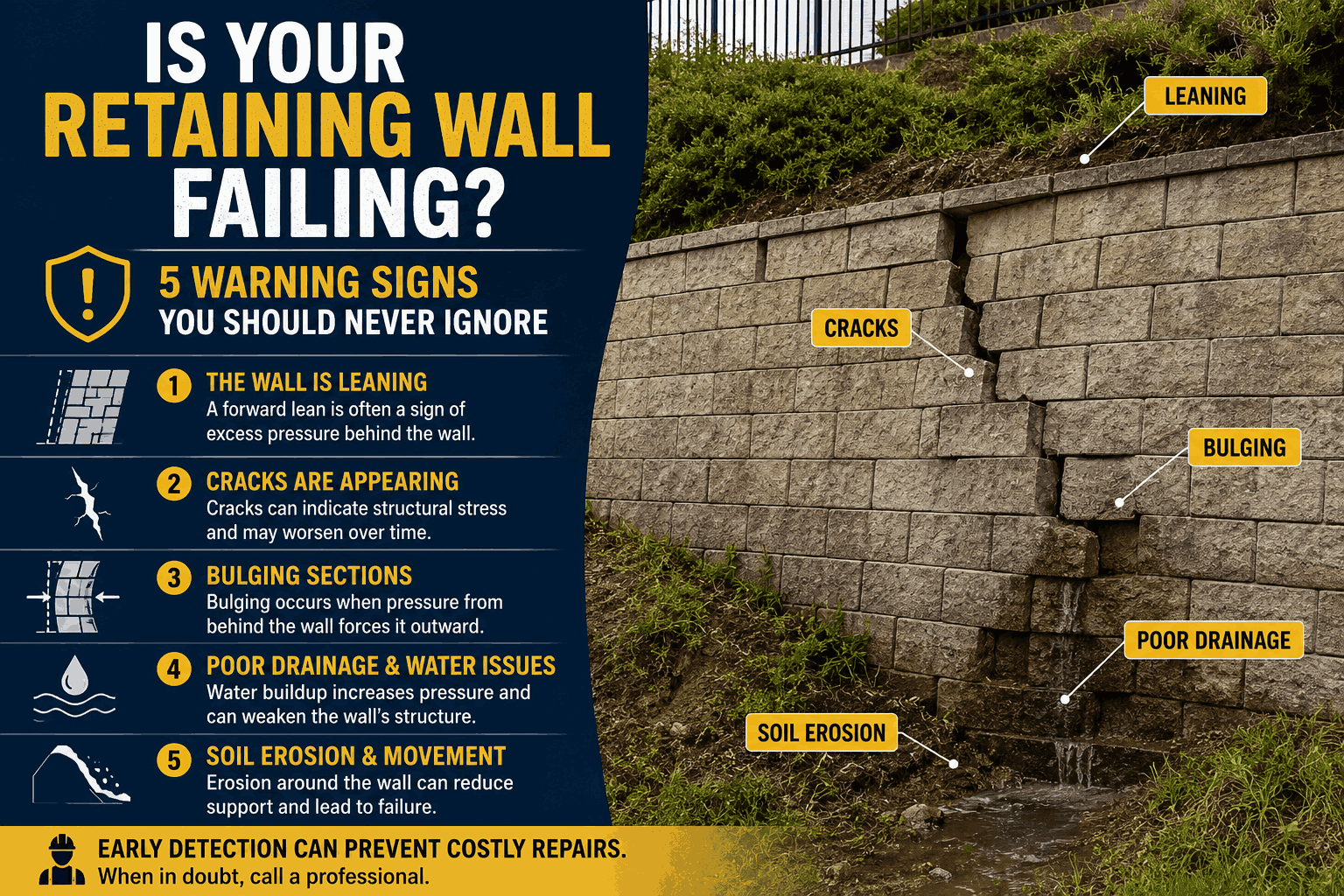
Is Your Retaining Wall Failing? 5 Warning Signs You Should Never Ignore
Retaining walls play a critical role in protecting your landscape and property. They hold back soil, prevent erosion, and help manage changes in elevation. While a retaining wall may appear solid and stable for years, hidden issues can develop over time. Ignoring early warning signs often leads to costly repairs, structural damage, and potential safety hazards.
The good news is that retaining walls usually provide clear indications when something is wrong. Recognizing these signs early can help homeowners address problems before they become major concerns.
In this guide, we will explore five warning signs that indicate your retaining wall may be failing and answer some of the most common questions homeowners ask about retaining wall damage.
Why Retaining Walls Fail
Before discussing the warning signs, it helps to understand why retaining walls experience problems in the first place.
Several factors can contribute to failure, including:
- Excessive soil pressure
- Poor drainage behind the wall
- Improper construction techniques
- Inadequate foundation support
- Aging materials
- Tree root intrusion
- Soil movement caused by weather changes
Over time, these issues place stress on the wall and can compromise its structural integrity.
Warning Sign #1: The Wall Is Leaning
One of the most obvious signs of a failing retaining wall is a noticeable lean.
Why Is the Wall Leaning?
A retaining wall should remain relatively straight throughout its lifespan. If you notice that the wall is tilting forward, it often means that the pressure behind it has become greater than the structure can safely withstand.
Common causes include:
- Saturated soil creating excessive weight
- Inadequate drainage systems
- Weak foundations
- Poor original construction
- Soil expansion and contraction
A slight lean may not seem alarming at first, but it can quickly worsen. As the wall shifts, additional pressure develops, increasing the risk of collapse.
What to Look For
Signs of leaning include:
- A wall that appears angled forward
- Gaps developing at the base
- Uneven alignment across the wall surface
- Visible movement compared to nearby structures
Even a small lean should be investigated promptly to prevent further damage.
Warning Sign #2: Cracks Are Appearing
Cracks are among the most common concerns homeowners notice in retaining walls.
Are Cracks Always a Serious Problem?
Not every crack indicates an immediate structural emergency. Small hairline cracks can occur naturally as materials age or settle.
However, larger cracks often signal underlying structural issues.
You should pay close attention to:
- Horizontal cracks
- Stair-step cracks in masonry walls
- Cracks that continue to grow
- Multiple cracks appearing across the wall
- Cracks accompanied by leaning or bulging
These types of damage often indicate that the wall is under significant stress.
What Causes Cracks?
Cracks can develop due to:
- Soil movement
- Freeze-thaw cycles
- Water pressure buildup
- Foundation settlement
- Excessive weight behind the wall
When cracks are ignored, water can enter the structure and accelerate deterioration.
Why Early Action Matters
Addressing cracks early is often much less expensive than waiting until major reconstruction becomes necessary. Regular inspections can help determine whether a crack is cosmetic or structural.
Warning Sign #3: Bulging Sections in the Wall
A bulging retaining wall is a major warning sign that should never be ignored.
What Causes Bulging Sections?
Bulging occurs when pressure behind the wall pushes outward against the structure.
Several factors may contribute:
- Poor drainage
- Water-saturated soil
- Excessive backfill weight
- Weak wall materials
- Inadequate reinforcement
As pressure builds, certain sections begin to deform and protrude outward.
Why Bulging Is Serious
Unlike small cosmetic imperfections, bulging often indicates that structural failure is actively developing.
The wall may no longer be distributing pressure evenly. As the affected area expands, the likelihood of collapse increases significantly.
Signs of Bulging
Watch for:
- Sections that curve outward
- Uneven wall surfaces
- Stones or blocks shifting position
- Separation between wall components
If bulging is visible, professional evaluation should not be delayed.
Warning Sign #4: Poor Drainage and Water Problems
Water is one of the biggest threats to retaining wall performance.
How Dangerous Is Poor Drainage?
Poor drainage is often the root cause of retaining wall failure.
When water becomes trapped behind the wall, it creates hydrostatic pressure. This pressure can become extremely powerful and push against the wall with tremendous force.
Over time, the wall may:
- Lean forward
- Crack
- Bulge outward
- Lose structural stability
Even a well-built retaining wall can fail if drainage is inadequate.
Common Drainage Warning Signs
Look for:
- Standing water near the wall
- Water flowing through cracks
- Erosion around the base
- Persistent wet spots
- Muddy areas after rainfall
These signs indicate that water is not being properly managed.
The Long-Term Impact of Water Damage
Water-related issues can weaken foundations, wash away supporting soil, and accelerate material deterioration. The longer drainage problems continue, the more expensive repairs often become.
Proper drainage systems are essential for extending the lifespan of any retaining wall.
Warning Sign #5: Soil Erosion and Material Movement
Retaining walls are designed to stabilize soil. When soil movement becomes visible, it often indicates that the wall is no longer performing effectively.
Signs of Soil Erosion
Pay attention to:
- Soil washing out around the wall
- Sinkholes forming nearby
- Exposed foundations
- Uneven ground surfaces
- Loss of landscaping materials
These issues often occur alongside drainage problems and structural deterioration.
Material Displacement
Another warning sign is when wall components begin to shift.
Examples include:
- Loose stones
- Misaligned blocks
- Separated joints
- Missing materials
These changes suggest that the wall’s structural system is weakening.
When Should Professional Help Be Called?
When Should Professional Help Be Called?
Many homeowners wonder whether they should monitor the problem or seek expert assistance immediately.
Professional evaluation is recommended when you notice:
- Leaning walls
- Large or expanding cracks
- Bulging sections
- Persistent drainage issues
- Soil erosion
- Shifting wall materials
Waiting too long can transform a repair project into a complete wall replacement.
Benefits of Professional Assessment
An experienced contractor can:
- Identify the root cause of the problem
- Evaluate structural stability
- Recommend cost-effective repairs
- Improve drainage systems
- Prevent future failures
A qualified Retaining Wall Contractor in Berkeley, CA can also assess local soil conditions and environmental factors that may be contributing to the issue.
Preventing Retaining Wall Failure
Preventive maintenance can significantly extend the life of your retaining wall.
Schedule Regular Inspections
Inspect the wall several times each year, particularly after heavy rain or severe weather.
Keep Drainage Systems Clear
Ensure drainage outlets remain free from debris and blockages.
Monitor Landscaping
Large tree roots can create pressure and destabilize wall foundations. Plant carefully and maintain vegetation around the wall.
Address Minor Problems Early
Small cracks, drainage concerns, and slight shifts should be evaluated before they become larger structural issues.
Work With Experienced Professionals
Whether building a new wall or repairing an existing one, hiring a reputable Bay Area General Contractor can help ensure the project is completed according to proper engineering and construction standards.
The Cost of Ignoring Retaining Wall Problems
Some homeowners delay repairs because the wall still appears functional. Unfortunately, retaining wall failures rarely improve on their own.
Ignoring warning signs can lead to:
- Property damage
- Landscape destruction
- Foundation issues
- Safety hazards
- Increased repair costs
In severe cases, wall collapse can threaten nearby structures, walkways, driveways, and outdoor living spaces.
The sooner problems are identified, the more affordable and manageable the repairs typically become.
Final Thoughts
Retaining walls are built to withstand significant pressure, but they are not immune to damage. Leaning walls, expanding cracks, bulging sections, drainage issues, and soil erosion are all warning signs that deserve immediate attention.
Understanding why these problems occur allows homeowners to take proactive steps before minor issues become major structural failures. Regular inspections and prompt repairs can help preserve both the appearance and safety of your property.
If you notice any of these warning signs, do not wait for the damage to worsen. A professional assessment can provide clarity, protect your investment, and help ensure your retaining wall continues to perform its important role for years to come.