
Earthquake Retrofit vs. Foundation Repair: Which One Does Your Home Need?
Earthquake Retrofit vs. Foundation Repair: Which One Does Your Home Need?
Homeowners in Berkeley often hear two terms when discussing structural safety: foundation repair and earthquake retrofitting. While both services are designed to protect your home, they solve very different problems. Understanding the distinction can help you make informed decisions, protect your investment, and ensure your home remains safe during California’s seismic events.
Many homeowners assume these services are interchangeable, but that’s not the case. One addresses existing structural damage, while the other focuses on preventing future earthquake-related damage. Knowing which service your property needs can save thousands of dollars and help avoid costly repairs later.
In this guide, we’ll explain the differences between foundation repair and earthquake retrofitting, identify warning signs to watch for, discuss costs, permits, and inspections in Berkeley, and help you determine the best course of action for your home.
Understanding Foundation Repair
A home’s foundation serves as the structural base that supports the entire building. Over time, foundations can develop problems due to soil movement, moisture fluctuations, poor drainage, tree roots, aging materials, or seismic activity.
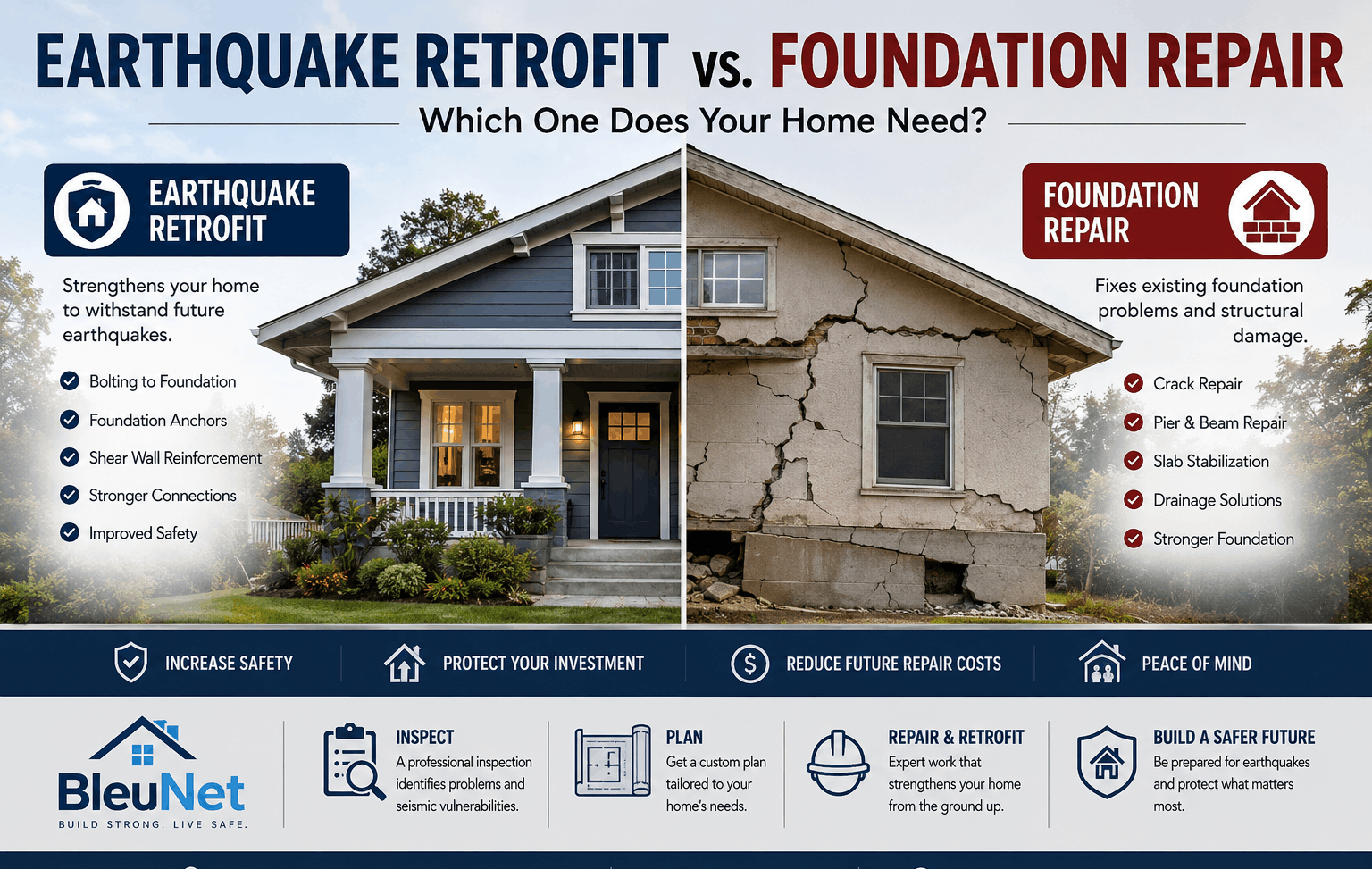
Foundation repair involves diagnosing and correcting structural issues that affect the integrity of the foundation. Depending on the severity of the damage, repairs may include:
- Crack repairs
- Pier installation
- Foundation underpinning
- Slab stabilization
- Drainage improvements
- Replacement of damaged structural elements
When a foundation becomes compromised, it can affect every part of the home. Floors may become uneven, walls may crack, and doors and windows may stop functioning properly.
For many homeowners seeking Foundation Repair in Berkeley, CA, early intervention is critical. Addressing foundation issues before they worsen can prevent extensive structural damage and significantly reduce repair costs.
Common Causes of Foundation Damage
Several factors contribute to foundation problems in Berkeley:
- Expansive clay soils
- Seasonal moisture changes
- Poor drainage systems
- Aging construction materials
- Tree root intrusion
- Earthquake-related soil movement
Because Berkeley sits in a seismically active region, foundations experience unique stresses that may not be present in other parts of the country.
Understanding Earthquake Retrofitting
Earthquake retrofitting is a preventive measure designed to strengthen a home’s resistance to seismic activity. Unlike foundation repair, retrofitting does not necessarily fix existing damage. Instead, it helps reduce the risk of major structural failure during an earthquake.
Many older homes in Berkeley were built before modern seismic building standards were established. As a result, they may lack critical reinforcement features needed to withstand strong ground shaking.
A typical retrofit project may include:
- Bolting the home to the foundation
- Installing foundation anchors
- Reinforcing cripple walls
- Adding plywood shear panels
- Strengthening structural connections
- Upgrading hold-down systems
The goal is to create a continuous load path that helps transfer earthquake forces safely through the structure.
Many homeowners researching Earthquake Retrofitting Berkeley CA are surprised to learn that a properly retrofitted home can significantly reduce earthquake damage and improve overall safety.
Why Retrofitting Matters
California remains one of the most earthquake-prone regions in the world. Even moderate seismic events can cause severe structural damage to older homes that lack proper reinforcement.
Benefits of retrofitting include:
- Increased occupant safety
- Reduced repair costs after earthquakes
- Improved structural stability
- Potential insurance benefits
- Increased property value
- Greater peace of mind
Are They the Same Service?
No.
Although foundation repair and earthquake retrofitting both involve structural work, they address different concerns.
Foundation repair focuses on correcting existing damage that threatens the stability of the home.
Earthquake retrofitting focuses on strengthening the structure to better withstand future seismic events.
Think of foundation repair as fixing a damaged vehicle. Earthquake retrofitting is more like installing advanced safety features before an accident occurs.
In some cases, a home may require one service, while in others, both may be necessary.
A professional inspection is the best way to determine which solution is appropriate.
Signs Your Home Needs Foundation Repair
Foundation problems rarely improve on their own. Identifying warning signs early can help prevent more extensive and costly damage.
Interior Signs
Watch for:
- Cracks in drywall
- Cracks around doors and windows
- Uneven floors
- Sagging floors
- Gaps between walls and ceilings
- Doors that stick or won’t close properly
Exterior Signs
Outside the home, look for:
- Stair-step brick cracks
- Foundation cracks
- Leaning chimneys
- Separation between walls and structures
- Visible settlement
Crawl Space Warning Signs
If your home has a crawl space, inspect for:
- Rotting wood
- Moisture accumulation
- Mold growth
- Damaged support posts
- Shifting beams
If you notice multiple symptoms, schedule a professional inspection as soon as possible.
Signs Your Home Needs an Earthquake Retrofit
Many homes that need retrofitting show no obvious signs of damage. Instead, risk factors are usually related to the home’s age and construction methods.
Your Home Was Built Before Modern Seismic Codes
Homes built before the 1980s often lack modern earthquake-resistant features.
The House Is Not Bolted to the Foundation
Many older homes simply rest on their foundations without proper anchoring.
Cripple Walls Are Unreinforced
Short wood-framed walls between the foundation and the main floor can collapse during an earthquake if not reinforced.
Previous Earthquake Damage Exists
Even minor earthquake damage may indicate structural vulnerabilities that should be addressed.
You Live Near Active Fault Lines
Berkeley’s proximity to major fault systems increases the importance of seismic preparedness.
You Are Planning Major Renovations
Retrofitting during a renovation project is often more efficient and cost-effective than performing it later.
Which Project Should Be Completed First?
This is one of the most common questions homeowners ask.
The answer depends on the condition of the home’s foundation.
If the foundation is damaged or unstable, foundation repair should generally be completed first. Retrofitting a compromised foundation can limit the effectiveness of seismic upgrades.
A stable foundation provides the structural base needed for successful retrofit work.
The typical order is:
- Structural inspection
- Foundation repairs
- Earthquake retrofit improvements
- Final inspection
This approach ensures that all reinforcement systems perform as intended during seismic events.
Can Both Services Be Combined?
Absolutely.
In fact, combining both projects is often the most practical solution for homeowners dealing with aging properties.
Benefits of combining services include:
- Reduced labor costs
- Fewer permit applications
- Less disruption to occupants
- Improved structural performance
- Streamlined project timelines
Contractors can often complete both phases simultaneously, particularly when access to crawl spaces or foundations is already required.
Combining services also allows engineers to create a comprehensive structural improvement plan rather than addressing issues separately.
Cost Comparison: Retrofit vs. Foundation Repair
Cost is often a major deciding factor for homeowners.
While every property is different, understanding typical price ranges can help set realistic expectations.
Foundation Repair Costs
Costs vary depending on:
- Severity of damage
- Foundation type
- Accessibility
- Soil conditions
- Structural complexity
Minor repairs may cost a few thousand dollars, while major stabilization projects can reach tens of thousands of dollars.
Earthquake Retrofit Costs
Retrofitting costs depend on:
- Home size
- Construction type
- Existing structural conditions
- Required upgrades
- Engineering requirements
Basic retrofit projects generally cost less than extensive foundation reconstruction.
Which Is More Expensive?
In many cases, major foundation repair projects cost more than standard earthquake retrofits because they involve correcting existing structural failures.
However, delaying either service can increase long-term costs significantly.
A professional evaluation is the most reliable way to obtain accurate pricing.
Berkeley Permit and Inspection Requirements
Most structural projects in Berkeley require permits and inspections.
Local building officials review plans to ensure work complies with current safety standards and building codes.
Projects that commonly require permits include:
- Foundation repairs
- Seismic retrofits
- Structural reinforcements
- Underpinning systems
- Foundation replacement
Permit requirements may vary depending on project scope.
Working with an experienced contractor can simplify the process by ensuring:
- Proper permit applications
- Engineering documentation
- Code compliance
- Inspection scheduling
- Final approval
Skipping permits may result in penalties, delays during property sales, and potential safety concerns.
How to Choose the Right Earthquake Retrofit Contractor
Selecting the right contractor is one of the most important decisions homeowners can make.
Verify Licensing and Insurance
Always confirm that the contractor holds appropriate licenses and insurance coverage.
Look for Structural Experience
Not all contractors specialize in seismic upgrades. Seek companies with extensive experience in structural reinforcement projects.
Ask About Engineering Support
Complex projects often require engineering evaluations and calculations.
Request References
Speak with previous clients and review completed projects whenever possible.
Understand the Scope of Work
Ask detailed questions about:
- Materials used
- Expected timeline
- Warranty coverage
- Inspection procedures
Obtain Multiple Estimates
Comparing several proposals can help you understand pricing and identify potential red flags.
A qualified Bay Area General Contractor with experience in structural work can help homeowners navigate both foundation repairs and seismic upgrades efficiently.
Final Thoughts
Foundation repair and earthquake retrofitting serve different but equally important purposes. One addresses existing structural problems, while the other helps protect your home from future seismic damage.
If you’re noticing cracks, uneven floors, sticking doors, or signs of settlement, foundation repair may be necessary. If your home is older, lacks proper anchoring, or has never been evaluated for seismic safety, retrofitting could be one of the smartest investments you can make.
In many Berkeley homes, the best solution involves a combination of both services. A professional inspection can identify current issues, assess earthquake vulnerability, and help prioritize the work that will provide the greatest long-term protection.
By addressing structural concerns proactively, homeowners can improve safety, preserve property value, and gain confidence that their homes are prepared for whatever the future may bring.