
Foundation Repair Inspection Checklist for Homeowners
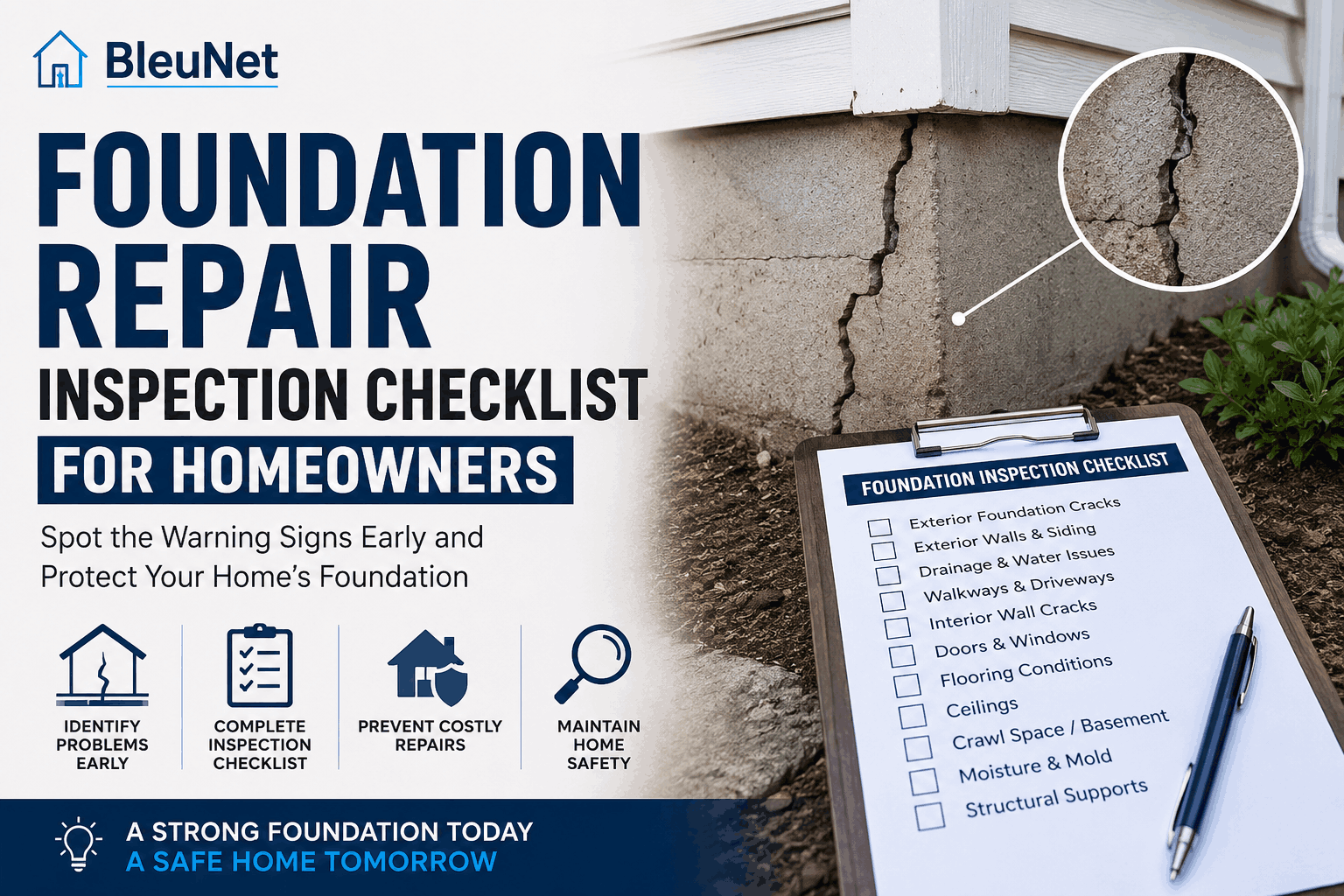
Foundation Repair Inspection Checklist for Homeowners
A strong foundation is the backbone of every home. It supports the entire structure, keeps floors level, and helps prevent costly structural problems. Unfortunately, foundation issues often develop gradually, making them easy to overlook until significant damage occurs.
Regular inspections can help homeowners identify warning signs early and take corrective action before repairs become more expensive. Whether you own an older property or a newly built home, understanding what to look for can save time, money, and stress.
This comprehensive foundation repair inspection checklist will help you evaluate your home’s condition and determine when it’s time to seek professional assistance.
Why Foundation Inspections Matter
Your home’s foundation is constantly exposed to environmental factors such as soil movement, moisture fluctuations, tree root growth, and natural settling. Over time, these factors can lead to cracks, uneven floors, sticking doors, and other structural concerns.
Routine inspections allow homeowners to:
- Detect problems early
- Prevent further structural damage
- Maintain property value
- Improve home safety
- Reduce long-term repair costs
A thorough inspection can also provide peace of mind by confirming that your home’s structure remains stable.
Exterior Foundation Inspection Checklist
Start your inspection by walking around the outside of your home. Many foundation problems become visible on exterior surfaces before they appear indoors.
1. Check for Foundation Cracks
Examine exposed foundation walls carefully.
Look for:
- Horizontal cracks
- Vertical cracks wider than 1/8 inch
- Stair-step cracks in masonry
- Expanding or widening cracks
Small hairline cracks may be normal due to settling, but larger or growing cracks often indicate structural movement.
2. Inspect Exterior Walls
Pay close attention to siding, stucco, brick, or concrete surfaces.
Warning signs include:
- Cracks in exterior walls
- Bulging sections
- Separation between materials
- Gaps around windows and doors
These symptoms may suggest foundation shifting beneath the structure.
3. Evaluate Drainage Around the Home
Water is one of the leading causes of foundation damage.
Check for:
- Standing water near the foundation
- Poor yard grading
- Clogged gutters
- Downspouts discharging too close to the house
Water should flow away from the structure to prevent soil expansion and erosion.
4. Examine Walkways and Driveways
Concrete surfaces can reveal underlying foundation movement.
Look for:
- Uneven slabs
- Large cracks
- Sections pulling away from the house
Changes in nearby hardscapes often indicate soil movement affecting the foundation.
5. Inspect Retaining Walls
If your property includes retaining walls, check for:
- Leaning walls
- Cracks
- Bulges
- Soil displacement
Retaining wall issues can contribute to foundation instability over time.
Interior Foundation Inspection Checklist
After evaluating the exterior, move indoors to inspect the home’s structural condition.
6. Look for Wall Cracks
Inspect walls throughout the home.
Pay attention to:
- Cracks above doors and windows
- Diagonal cracks
- Cracks at ceiling corners
- Repeated crack repairs
These signs may indicate structural movement rather than cosmetic damage.
7. Check Ceilings for Damage
Foundation shifts can affect ceilings as well.
Watch for:
- Ceiling cracks
- Sagging areas
- Separation between walls and ceilings
New or growing damage deserves immediate attention.
8. Test Doors and Windows
Foundation settlement often causes framing misalignment.
Open and close every door and window.
Look for:
- Sticking doors
- Doors that swing open by themselves
- Windows that won’t lock properly
- Uneven gaps around frames
These issues frequently signal foundation movement.
9. Examine Flooring
Uneven flooring is one of the most common indicators of foundation problems.
Check for:
- Sloping floors
- Sagging sections
- Cracked tile
- Gaps between flooring materials
Use a level if necessary to identify subtle changes.
10. Inspect Baseboards and Trim
Foundation movement can create separation between structural elements.
Look for:
- Gaps between walls and baseboards
- Detached trim
- Uneven molding
These details often reveal movement that may not be obvious elsewhere.
Crawl Space Inspection Checklist
Homes with crawl spaces require additional inspection.
11. Check for Excess Moisture
Moisture is a major contributor to foundation deterioration.
Inspect for:
- Damp soil
- Standing water
- Condensation
- Mold growth
Persistent moisture should be addressed immediately.
12. Look for Wood Damage
Excess humidity can damage structural components.
Watch for:
- Rotting wood
- Soft support beams
- Termite activity
- Fungus growth
Compromised supports can affect the stability of the entire home.
13. Examine Support Piers
Support piers help distribute structural loads.
Look for:
- Leaning piers
- Cracked supports
- Settlement
- Improper spacing
Any visible deterioration should be evaluated by a professional.
Basement Inspection Checklist
If your home includes a basement, inspect it thoroughly.
14. Search for Water Intrusion
Water infiltration can weaken foundations over time.
Look for:
- Damp walls
- Water stains
- Efflorescence (white powder deposits)
- Mold or mildew
These signs often indicate drainage or waterproofing issues.
15. Inspect Basement Walls
Foundation walls should remain straight and stable.
Watch for:
- Bowing walls
- Horizontal cracks
- Bulging sections
- Wall displacement
These symptoms may indicate soil pressure against the foundation.
16. Evaluate Structural Supports
Check support columns and beams.
Look for:
- Rust
- Cracks
- Bending
- Settlement
Structural supports play a critical role in maintaining building integrity.
Seasonal Factors That Affect Foundations
Different seasons can influence foundation performance.
During Dry Weather
Extended drought conditions can cause soil shrinkage.
Watch for:
- New cracks
- Foundation settlement
- Uneven flooring
During Wet Seasons
Excess moisture can cause soil expansion.
Monitor for:
- Standing water
- Foundation heaving
- Basement leaks
Seasonal changes can accelerate existing foundation issues.
Common Causes of Foundation Damage
Understanding potential causes helps homeowners take preventative measures.
Soil Movement
Expansive soils swell when wet and shrink when dry, creating pressure on foundations.
Poor Drainage
Improper water management can erode soil and weaken structural support.
Tree Roots
Large roots may absorb moisture unevenly, causing soil movement around foundations.
Plumbing Leaks
Underground leaks can saturate soil and contribute to foundation settlement.
Natural Settling
All homes settle to some extent, but excessive settlement may require corrective action.
When to Call a Professional
While homeowners can perform basic inspections, certain signs warrant immediate professional evaluation.
Contact a specialist if you notice:
- Large foundation cracks
- Bowing basement walls
- Significant floor slopes
- Repeated cracking after repairs
- Water intrusion issues
- Multiple structural warning signs
Professional inspections often include advanced measurements and structural assessments that provide a more accurate understanding of the home’s condition.
For homeowners considering Foundation Repair in Berkeley, CA, scheduling a detailed inspection at the first sign of trouble can help prevent extensive structural damage and higher repair costs later.
Preventative Maintenance Tips
Preventing foundation problems is often easier and less expensive than repairing them.
Maintain Proper Drainage
Ensure gutters and downspouts direct water away from the home.
Monitor Soil Moisture
Maintain consistent moisture levels around the foundation, especially during drought periods.
Address Plumbing Leaks Quickly
Repair leaks as soon as they are detected to avoid soil saturation.
Trim Trees and Large Shrubs
Manage root growth near the home’s foundation.
Schedule Regular Inspections
Annual inspections can identify small issues before they become major structural concerns.
Choosing the Right Professional for Foundation Evaluation
Not all contractors have the same level of expertise when it comes to structural repairs. Look for professionals who have experience with foundation systems, soil conditions, and structural assessments.
A reputable Bay Area General Contractor can coordinate inspections, identify underlying causes, and recommend appropriate repair solutions based on your home’s unique conditions.
Final Thoughts
Foundation issues rarely resolve themselves. Small cracks, drainage problems, and minor settlement can eventually lead to major structural concerns if left unchecked.
Using this foundation repair inspection checklist gives homeowners a practical way to monitor their property’s condition and identify potential warning signs early. By performing regular inspections, addressing maintenance concerns, and seeking professional guidance when needed, you can protect your home’s value, safety, and structural integrity for years to come.